
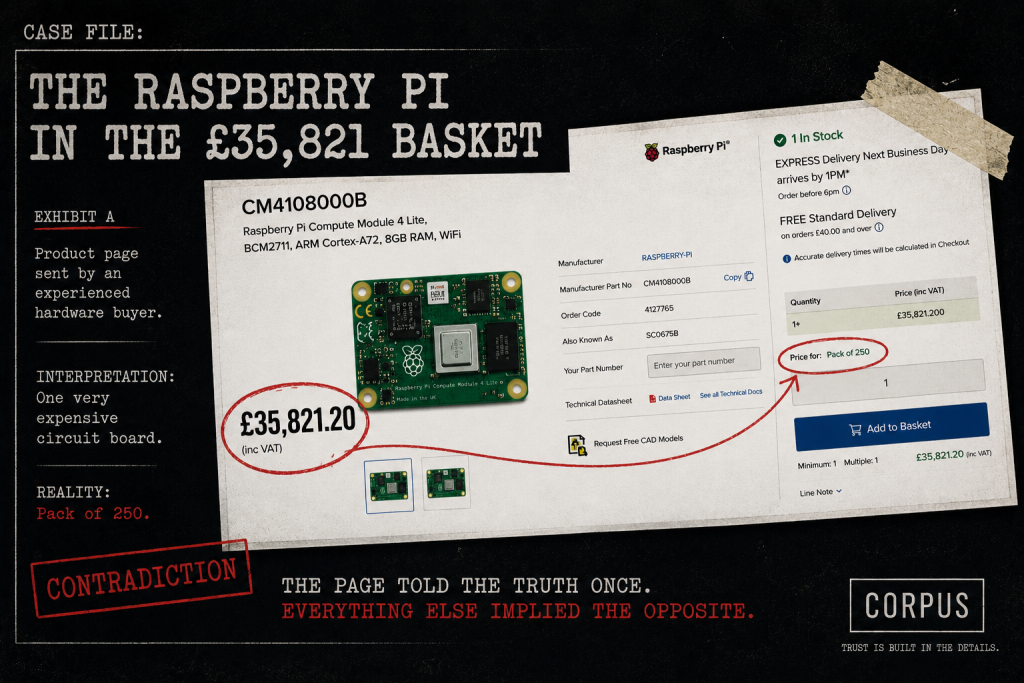
A product page made an experienced hardware buyer believe one Raspberry Pi cost more than a family car. The pack price was technically visible. Almost everything else said one unit.
Phil sent me a product link because something looked deeply wrong.
On the left was a Raspberry Pi Compute Module: a small green circuit board that could sit comfortably in the palm of your hand.
On the right was the price:
£35,821.20
Phil has worked in IT for more than 25 years. He has bought more hardware than any reasonable person should have to contemplate.
He still thought that was the price of one module.
So did I, briefly.
Then, after a couple of minutes of staring at the page and wondering what fresh component-pricing hell had opened beneath us, I spotted four quiet words:
Price for: Pack of 250
The price was not the strange part.
The strange part was why two technically literate people had both interpreted the page in exactly the way the seller did not intend.
The obvious explanation is that we missed the pack size.
It was there. The page said it, so case closed perhaps?
Except that interpretation only works if every piece of information on a page carries equal weight.
It does not.
People do not read interfaces as neutral inventories of facts. We build meaning from hierarchy, repetition, convention and context.
By the time we reached the pack information, the page had already told us what “one” meant.
Phil had not set out to buy 250 compute modules. He had been reading The Register, saw a headline about Raspberry Pi prices and searched Google out of curiosity. He is a longstanding Raspberry Pi enthusiast, so this was an ordinary price check—not a specialist procurement task.
He searched Google for: raspberry pi prices
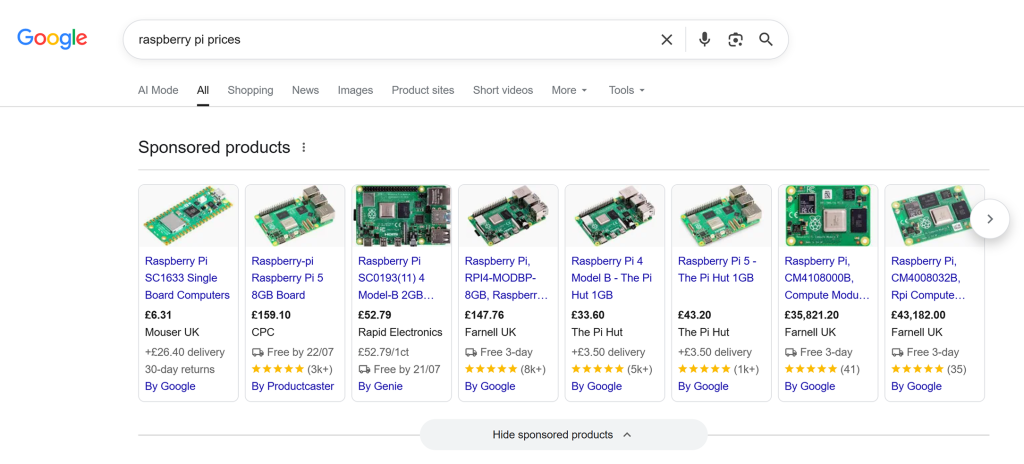
Google presented the product in a sponsored shopping carousel alongside ordinary Raspberry Pi boards priced between roughly £6 and £160.
Each result used the same structure:
Then came the Farnell listing: £35,821.20
There was no visible mention of a pack of 250.
So before Phil reached the product page, Google had already framed the listing as one product with one price.
The surrounding results supplied the comparison.
The ad supplied the number.
His brain supplied the obvious unit: one board.
The product page did not create that belief from scratch.
It inherited it, then reinforced it.
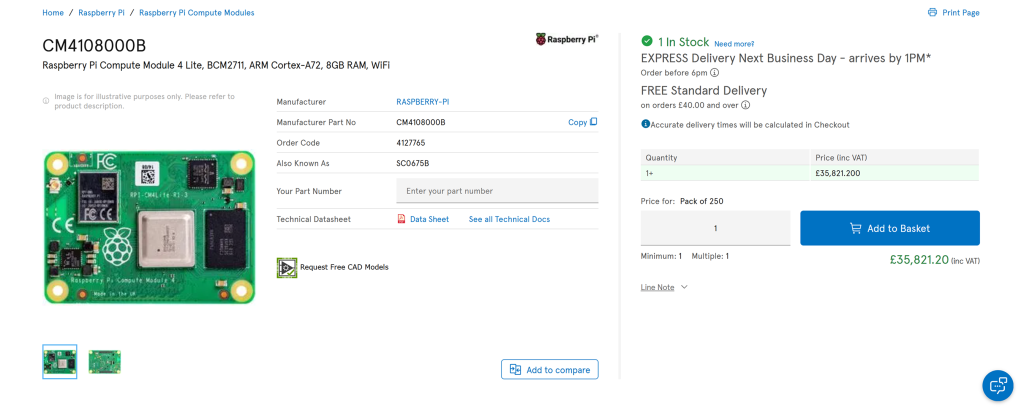
The button said: Add to Basket
Every strong signal described a single purchasable object.
So when the page displayed £35,821.20, the brain did not immediately ask: Does “one” secretly mean 250?
It asked:
Why does this particular Raspberry Pi cost thirty-five grand?
That was not an irrational conclusion.
It was the conclusion the interface had prepared us to reach.
Interfaces establish meaning cumulatively.
One signal shapes the interpretation of the next.
The image suggests one product.
That makes “1 In Stock” feel like one product.
The quantity field reinforces that same interpretation.
The minimum and multiple values confirm it again.
By the time the buyer encounters “Pack of 250”, the purchasing unit has already been inferred.
The correcting information is not competing with an empty mind.
It is competing with the entire visual grammar of the page.
And losing.
He understood the interface and reached the wrong answer.
This is the satisfying bit.
Phil did not fail to understand a hardware listing.
The page told the truth once and implied the opposite everywhere else.
That distinction matters.
A business can include the correct information and still communicate the wrong thing.
Truth being technically present is not the same as truth being successfully understood.
Phil’s experience should have made him resistant to this kind of mistake.
Instead, it probably made the page more believable.
He knows specialist hardware can be painfully expensive.
He knows some components have unusual supply constraints.
He knows distributor pricing can look absurd at first glance.
So rather than assuming the interface had mangled the pack structure, his brain briefly tried to reconcile the displayed price with reality.
That is what people often do when a trusted seller presents information with confidence.
They assume the system knows what it is saying.
Then they try to make the facts fit.
For the sake of completeness—and mild chaos—I added the item to the basket.
Only then did the interface become explicit: Product 4127765 has a pack size of 250 items. This means that you are purchasing 250 items.
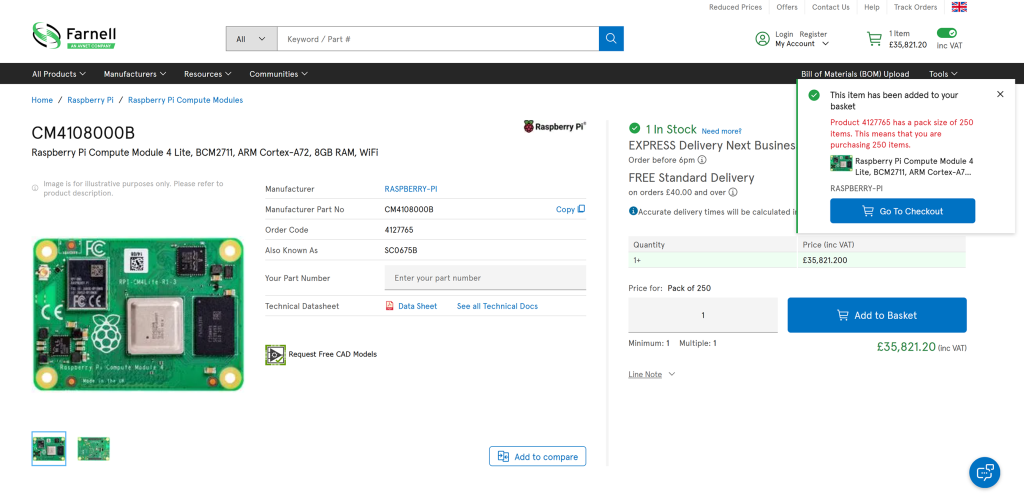
The basket repeated the same warning:
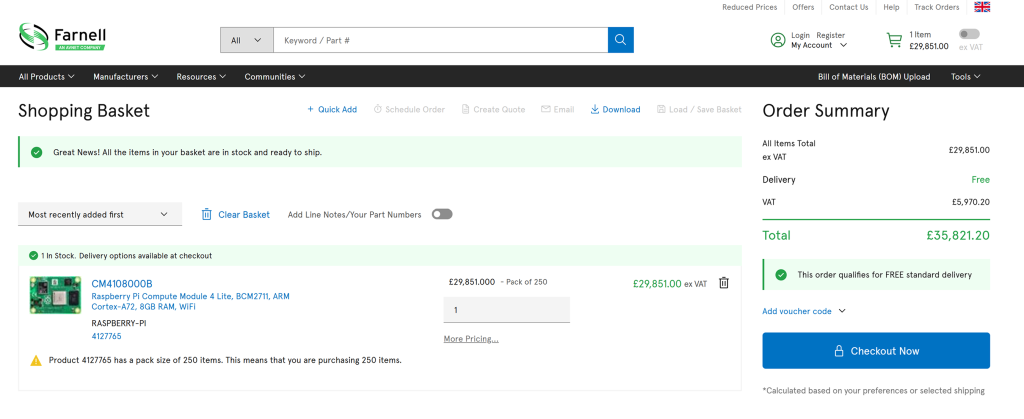
So the system knew the pack size. It knew that quantity 1 meant 250 modules. It knew this distinction was important enough to warn the buyer about.
It simply waited until after the buyer had pressed Add to Basket.
The problem was not missing information.
The problem was delayed truth.
Reality
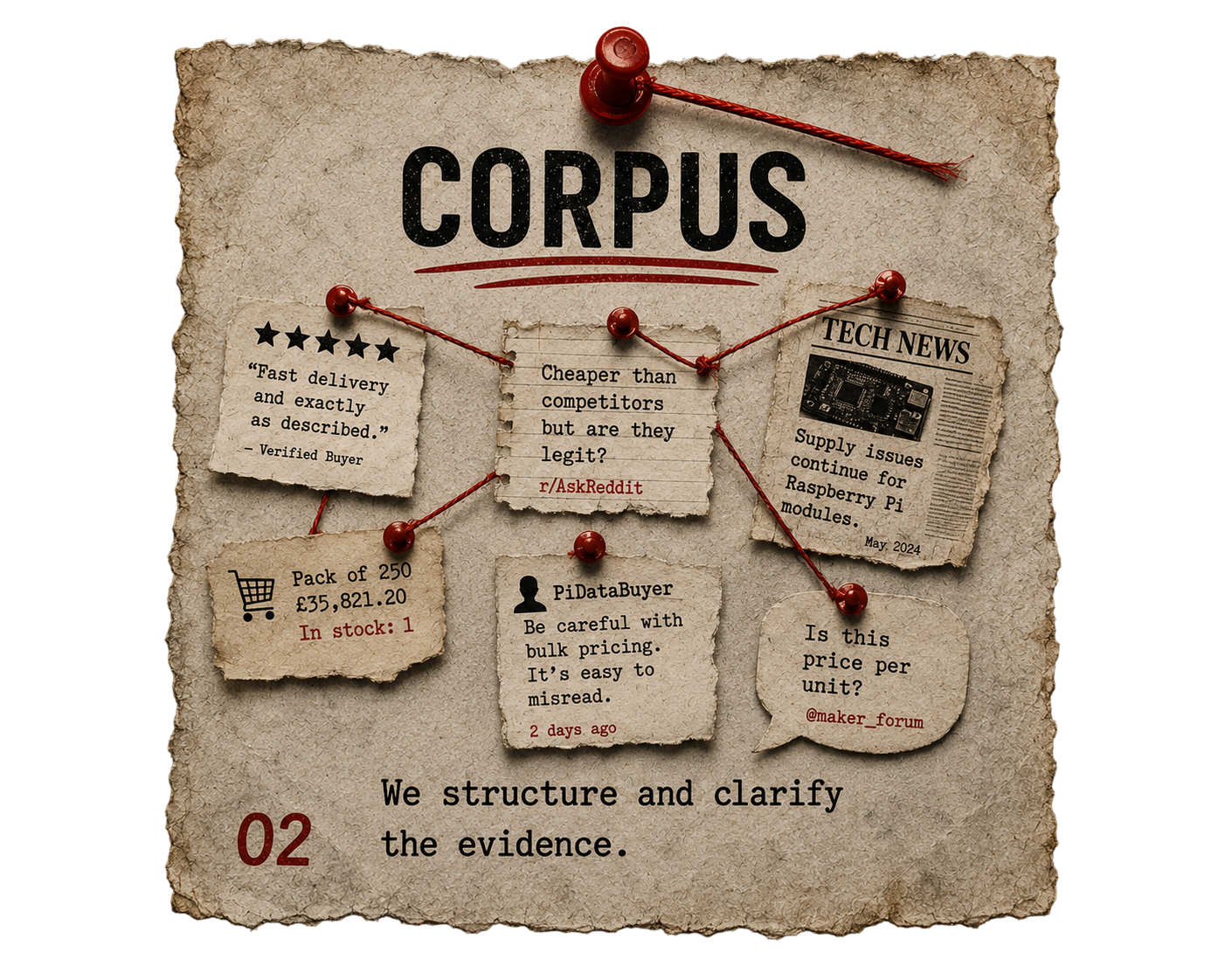
Corpus
Model
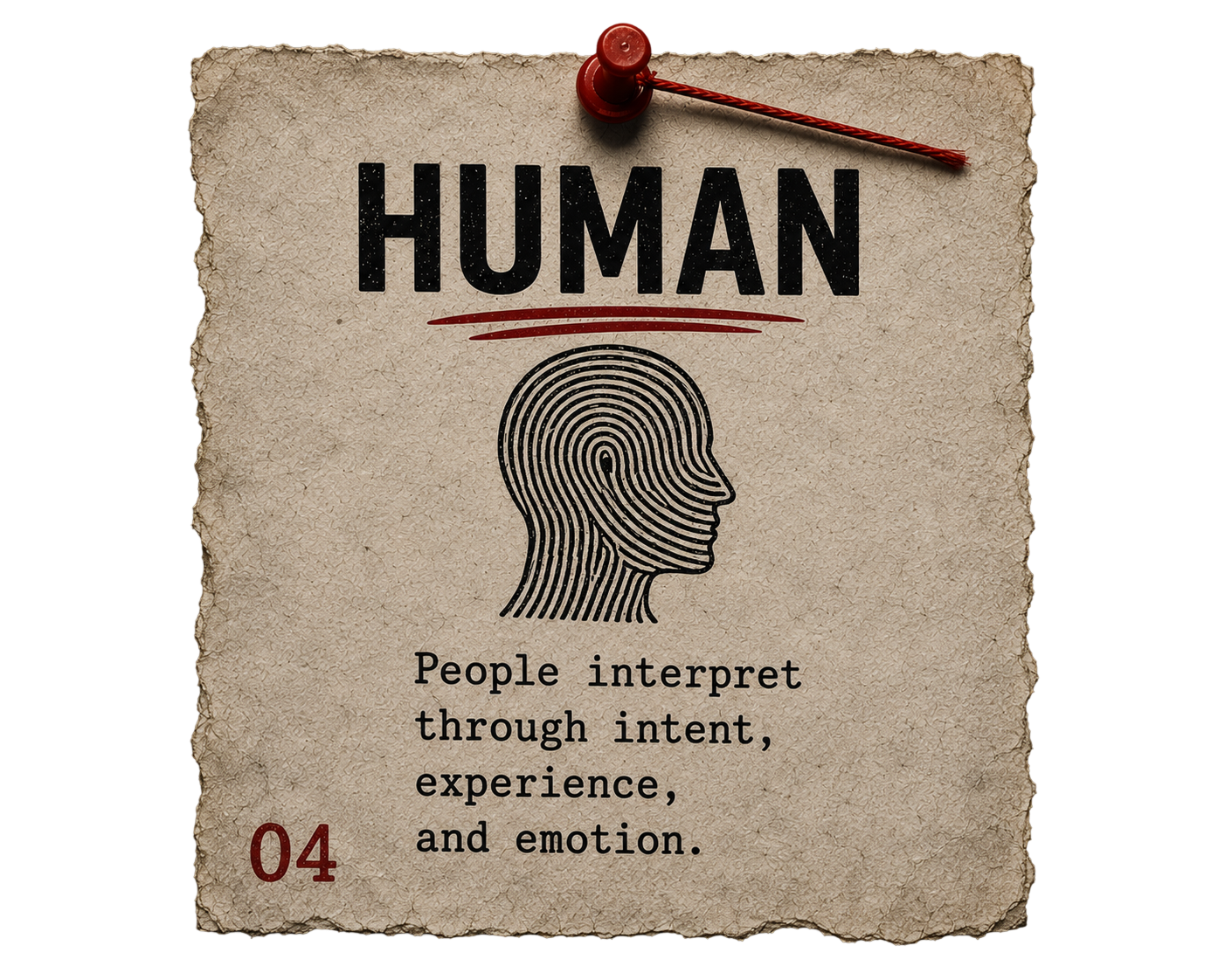
Human
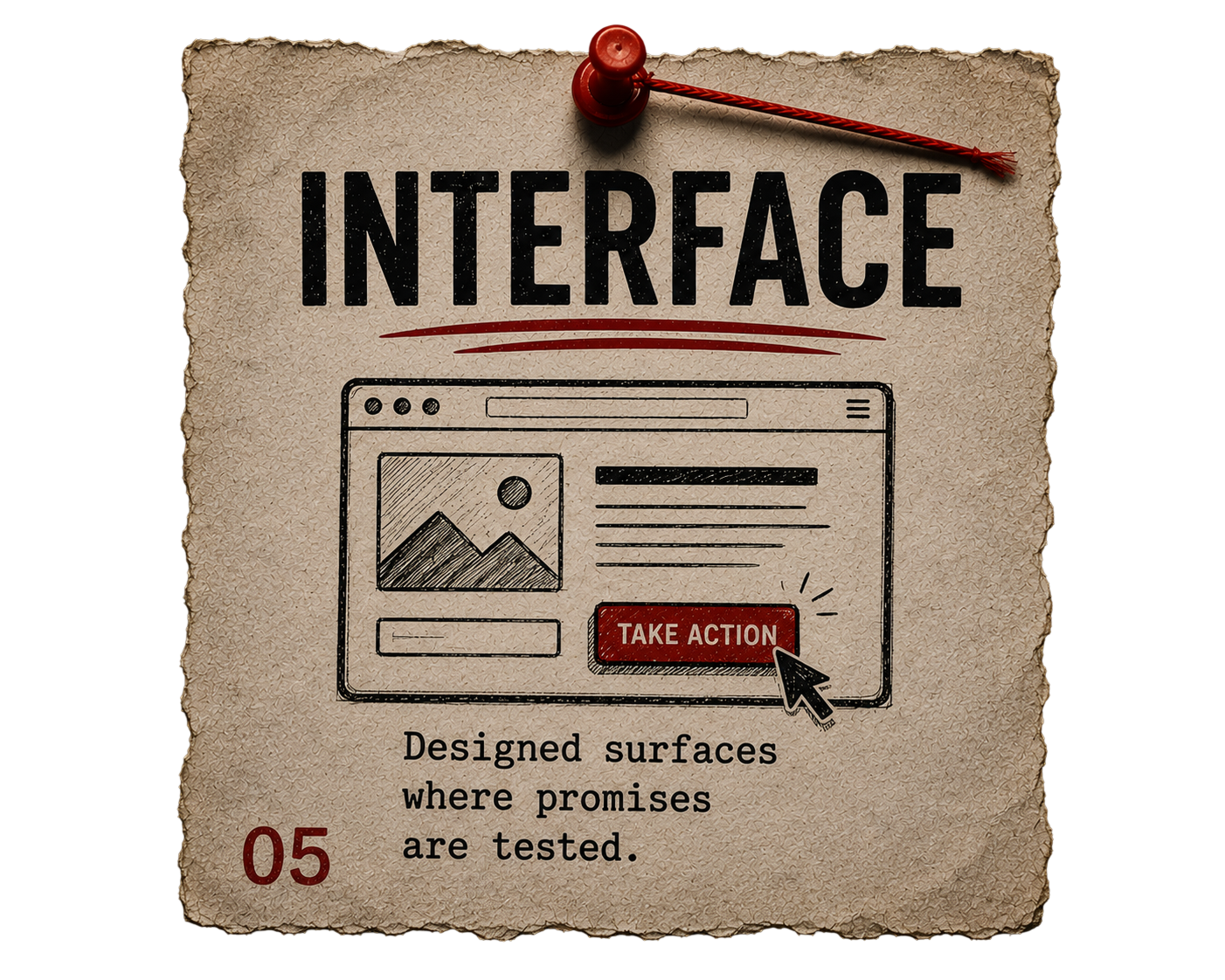
Interface
The single-unit interpretation survived across search, product and basket surfaces because the strongest signals agreed with one another. The corrective unit appeared only after the buyer acted.
The buyer was asked to commit before the interface fully defined the offer. The correction arrived after the decision point.
The page needed one stable buying unit, repeated everywhere.
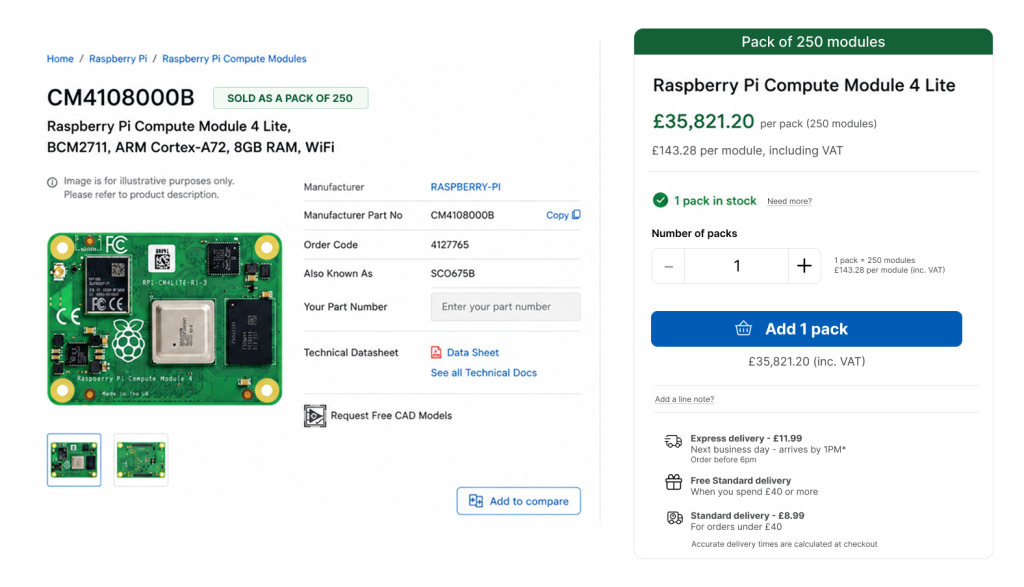
The important change is not cosmetic. Every use of “one” now refers to one pack, every price names its unit, and the buyer can see both the pack total and the per-module price before acting.
No mystery.
No forensic work.
No brief concern that Raspberry Pi had entered the luxury goods market.
The page did not need more information.
It needed the existing information to agree with itself.
Otherwise an experienced hardware buyer may spend several minutes believing a Raspberry Pi now costs the same as a family car.
And given component pricing lately, perhaps not even question it quickly enough.